The Life and Legacy of César Franck, Master of Sacred Sound
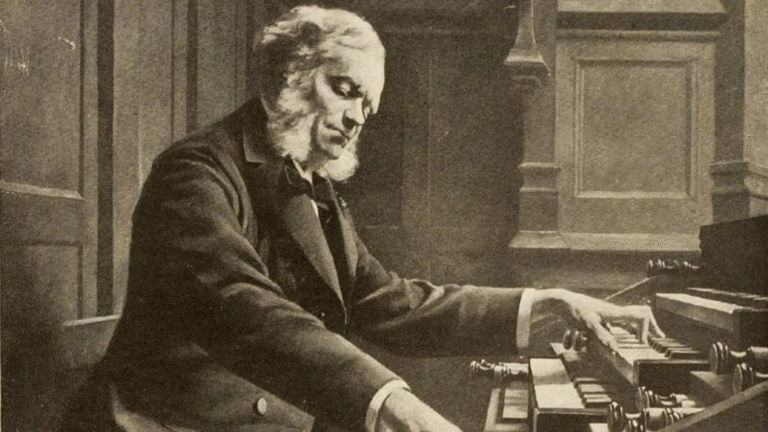
Our next feature in the Famous Organists of History series highlights César Franck, a Belgian-born organist and composer whose remarkable journey shaped organ music forever. Franck’s talent, discipline, and innovation produced masterpieces that remain central to organist repertoires today.
An Intensive Early Life
César Franck was born in Liège, Belgium, on December 10, 1822, when the region was still part of the United Kingdom of the Netherlands. His father, Nicolas-Joseph Franck, dreamed of wealth and fame through his son’s talent. Determined to make César a prodigy, he enrolled him at the Royal Conservatory of Liège at age eight to study piano, solfège, organ, and harmony.
In 1834, Nicolas-Joseph withdrew César from school to begin performing. The young musician quickly impressed audiences, even performing for Leopold I, King of Belgium. Still unsatisfied, Nicolas-Joseph moved the family to Paris in 1835 to seek greater recognition.
In Paris, César and his brother Joseph studied privately with renowned teachers Anton Reicha and Pierre Zimmerman. To attend the Paris Conservatoire, Nicolas-Joseph obtained French citizenship in 1837 for the family. Franck thrived there, winning first prize in piano in his first year. He later studied organ under François Benoist and earned second prize in organ in 1841.
By 1842, the Francks left the Conservatoire, most likely due to their father’s influence. César began performing publicly and teaching, but critics grew hostile toward his father’s aggressive pursuit of fame. Negative press followed, pushing the family to return briefly to Belgium before settling again in Paris.
During this period, Franck wrote his first mature compositions. Public reception remained poor, so he focused on teaching and accompanying. Amid these challenges, he found solace in Félicité Desmousseaux, a longtime friend who later became his wife.
Their relationship caused tension with his controlling father, who destroyed a composition dedicated to Félicité. Franck, undeterred, rewrote it from memory and eventually left home to live with the Desmousseaux family. He married Félicité after turning 25, the legal age to wed without parental consent. Legend says the couple crossed revolutionary barricades with help from insurgents to reach their wedding church.
An Organist Emerges
After marriage, Franck joined Notre-Dame-de-Lorette as assistant organist in 1847. Although his piano skill was superior, he worked tirelessly to master the organ. His dedication impressed Abbé Dancel, who invited him to serve as titulaire (main organist) at Saint-Jean-Saint-François-au-Marais in 1851.
At this new church, Franck encountered the extraordinary Aristide Cavaillé-Coll organ. Enchanted by its symphonic sound, he exclaimed, “My new organ, it’s like an orchestra!” This experience marked a turning point in his career.
Franck became closely associated with the Cavaillé-Coll brand, performing at organ inaugurations and demonstrating new instruments. During this era, organ design evolved rapidly with the rise of the German pedalboard. Determined to adapt, Franck practiced extensively and achieved remarkable technical precision.
In 1858, he accepted the titulaire position at Sainte-Clotilde, a role he held for life. The parish installed a new Cavaillé-Coll organ, which Franck adored, once saying, “If you only knew how I love this instrument, it is so supple beneath my fingers and so obedient to all my thoughts.”
Between 1860 and 1862, he composed his legendary Six Pièces for organ, hailed by scholar Rollin Smith as “the most important organ music written since Mendelssohn.” These works, along with his celebrated improvisations, drew large crowds to Sainte-Clotilde’s services.
Franck’s Later Life
Franck’s reputation flourished, and in 1873 he succeeded his former teacher Benoist as Professor of Organ at the Paris Conservatoire. To qualify, he had to reapply for French citizenship, which had lapsed when he turned 21.
His students admired him deeply, affectionately calling him “Father Franck.” Though some colleagues criticized his unconventional teaching, Franck remained a patient and generous mentor. His compositions from this period reflected both personal devotion and Romantic innovation.
Tragically, Franck’s final years were marked by poor health. After a carriage accident in 1890 and a bout of pleurisy, he passed away on November 8, 1890. Before his death, he completed the Trois Chorals, three profound works often regarded as his musical farewell.
Keeping the Legacy Alive
At Viscount Organs, we share César Franck’s passion for creativity and expression. His love for the organ and its endless possibilities continues to inspire musicians around the world.
Our instruments honor this legacy by blending classic craftsmanship with modern innovation, echoing the artistry Franck championed at Sainte-Clotilde. Whether you are a performer, student, or admirer of organ music, Viscount Organs is here to help you keep that timeless sound alive.
Share the Posts:
Related Posts
Organ Maintenance: Must Knows Of Cleaning Your Viscount Organ
The History Of The Viscount Organ