Between Faith and Fugue: The Enduring Legacy of Albert Schweitzer
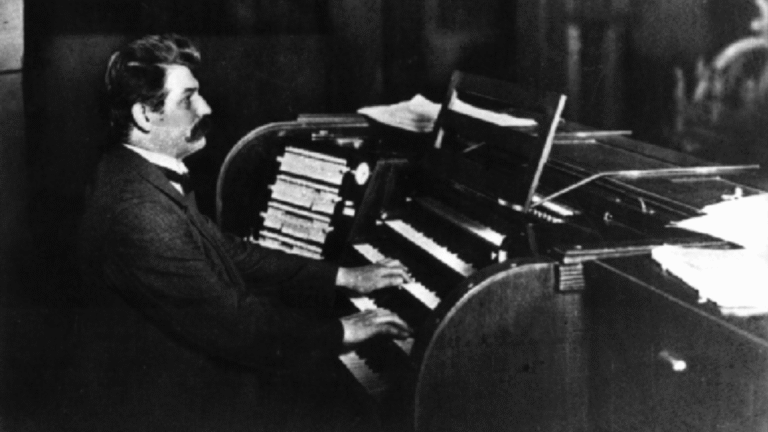
Albert Schweitzer was a man of many titles. He was a Nobel Laureate, theologian, philosopher, and musician. At Viscount Organs, we celebrate him most for his remarkable legacy as an organist and his influence on organ culture.
In this blog, we continue our Famous Organists Series by exploring the life and impact of Albert Schweitzer.
Schweitzer’s Introduction to Music
As a child in Kaysersberg, France, Schweitzer learned music from his father. He inherited his family’s musical passion early in life.
From 1885 to 1893, he studied at the Mulhouse Gymnasium, where he trained under Eugène Munch, a cathedral organist. Munch’s admiration for composer Richard Wagner deeply inspired Schweitzer’s devotion to the organ and its culture.
In his final school year, Schweitzer performed for renowned organist Charles-Marie Widor. Impressed by his talent, Widor offered him free lessons and mentorship. This marked the beginning of Schweitzer’s influence on organ music and performance.
Schweitzer’s Impact on Organ Music
To understand Schweitzer’s musical influence, we must consider his theological roots. As the son of a Christian pastor, he grew up surrounded by church music.
His parish housed both Catholic and Protestant congregations. This exposure shaped his belief that faith should unify through purpose and devotion.
After primary schooling, Schweitzer attended Kaiser Wilhelm University in Strasbourg, France. There, he studied Protestant theology and later earned a PhD in philosophy and theology.
His background in religion strongly shaped his musical perspective. His connection to the church acquainted him with the organ, a central instrument in worship.
One of Schweitzer’s greatest contributions was his interpretation of J.S. Bach’s organ compositions.
J.S. Bach: Le Musicien-Poète
Schweitzer devoted much of his study to exploring symbolic and pictorial elements in Bach’s organ works. He found that Bach used musical motifs and rhythms to reflect hymn lyrics and spiritual themes.
Encouraged by his peers, Schweitzer developed these insights into his landmark 1905 study, J.S. Bach: Le Musicien-Poète.
The book gained international acclaim for its originality. When asked to translate it into German, Schweitzer instead rewrote it entirely to better suit the language.
In 1911, Ernest Newman translated the work into English, making it accessible to musicians worldwide.
J.S. Bach: Le Musicien-Poète remains one of the most respected studies on Bach’s music. Schweitzer’s analysis continues to shape how we understand Bach’s legacy today.
The Organ Advocate
Throughout his life, Schweitzer passionately promoted the preservation and improvement of pipe organs. He became the driving force behind the organ reform movement (Orgelbewegung).
This movement began after he published a 1906 pamphlet titled The Art of Organ Building and Organ Playing in Germany and France. In it, he argued that modern Romantic organs had become overly complex.
Schweitzer believed that these newer organs blurred individual tones, making it hard to distinguish musical lines. Determined to address this, he surveyed organists about their preferences and designed his ideal organ specifications.
Though his ideas initially faced criticism, they eventually shaped the International Regulations of Organ Building. His framework became a global reference point for organ construction.
Later, the regulations were revised and refined, but Schweitzer’s reform movement left a lasting mark on organ history.
A True Legend
Albert Schweitzer was a man of extraordinary intellect and creativity. His work in music, theology, and humanitarianism defined him as a true genius.
We’ve only touched on a few highlights of his immense influence on organ culture. We encourage organ enthusiasts to explore his writings on Bach, his essays on organ design, and his autobiography.
At Viscount Organs, we carry forward the spirit of great organists like Albert Schweitzer. We are dedicated to advancing the art of organ performance and preserving its timeless beauty.
Visit our website to learn more about our instruments, or contact us today to experience one of our world-class organs yourself.
Share the Posts:
Related Posts
Organ Maintenance: Must Knows Of Cleaning Your Viscount Organ
The History Of The Viscount Organ